Commercial
Commercial locksmith work for District businesses
Business doors carry obligations a house door does not. They have to open from the inside without a key, survive far more use, and let the right people in without handing out keys to everybody.
Why it is a different trade
Three things change once a door is commercial
It has to open from the inside
Anything fitted to a door people work behind has to let them out without a key, a tool or special knowledge. That rules out a range of hardware that is perfectly legal on a house, including the double-cylinder deadbolts sometimes suggested for glazed doors. Where a door is on a means of egress, an exit device is usually the answer rather than a lock that can be secured from the inside.
It gets used far more
A house front door might cycle a few thousand times a year. A café door does that in a month. Residential-grade hardware fitted to a business door does not fail because it was badly made; it fails because it was never meant for the number of cycles. This is where the ANSI/BHMA grades earn their keep.
People come and go
Staff change, contractors finish, tenants move out. A business needs a way to remove someone's access without recalling every key in the building, which is what a properly planned key system is for.
Master keying
One system instead of a drawer full of keys
A master key system decides, in advance, which keys open which doors. It is worth planning on paper before a single cylinder is pinned, because the structure is difficult to change later.
| Key | Opens | Typically held by |
|---|---|---|
| Change key | One door | The person who works behind it |
| Sub-master | A group of doors | A supervisor or department |
| Master | Every door in the system | Owner or manager, kept short |
Two decisions matter more than the rest. First, how many people genuinely need a master — every extra one multiplies the cost of a lost key. Second, whether to use a restricted keyway, where blanks are controlled and a copy cannot simply be cut at a hardware counter.
Systems can be extended later if they were designed with room in them. Retrofitting structure onto a set of unrelated locks means rekeying every cylinder at once, so it is worth an hour of planning at the start.
Hardware we work on
The parts of a commercial opening
A business door is an assembly rather than a single product. Any one part of it can be the thing that has failed, which is why the diagnosis matters more here than it does on a house.
Mortise locks
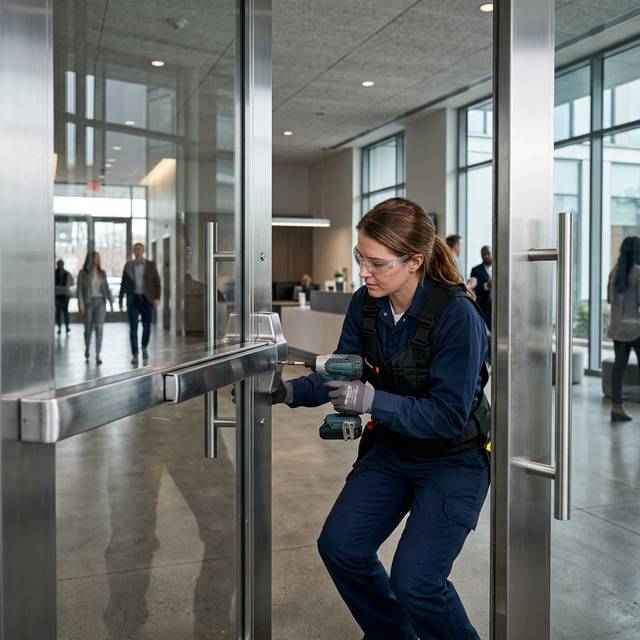
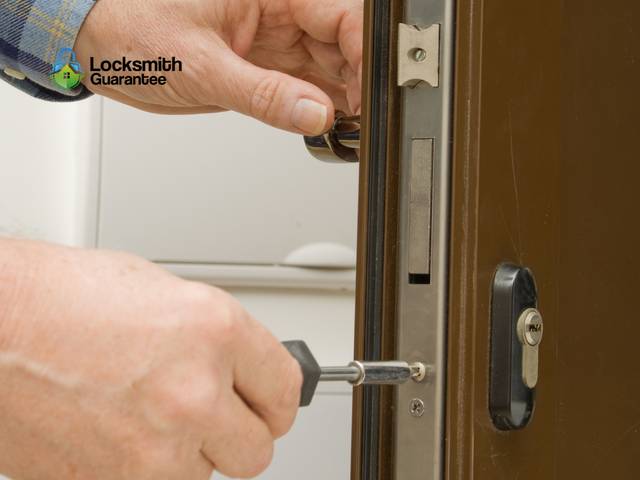
The standard for storefront and office doors. Serviceable, rebuildable, and worth repairing rather than replacing when the case is sound.
Exit devices
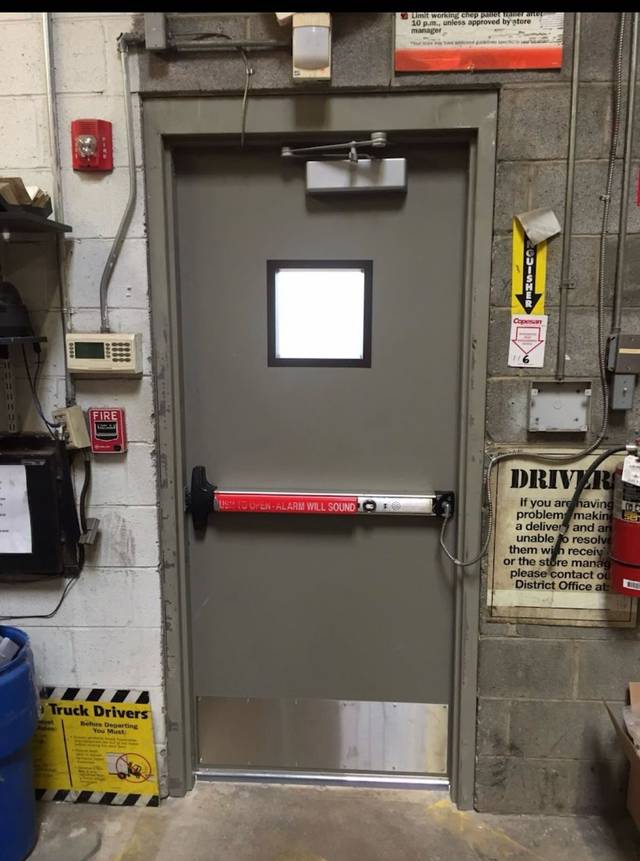
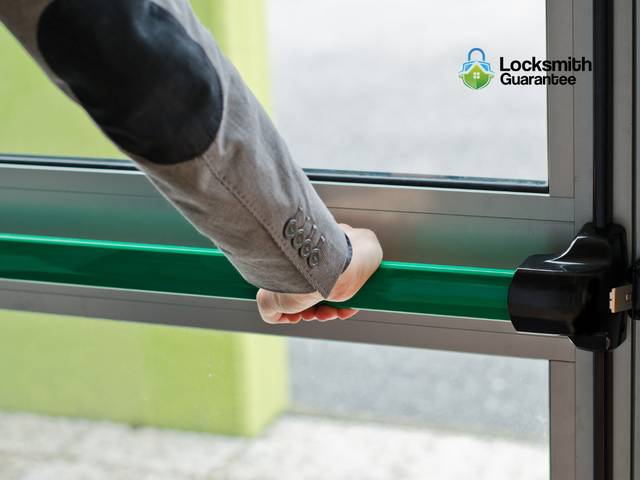
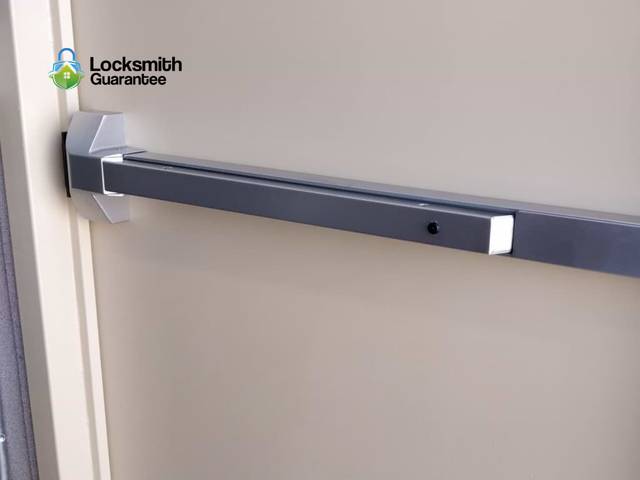
Push bars and rim devices. They wear at the latch and the dogging mechanism, and a sticking one is a problem worth fixing rather than propping.
Door closers
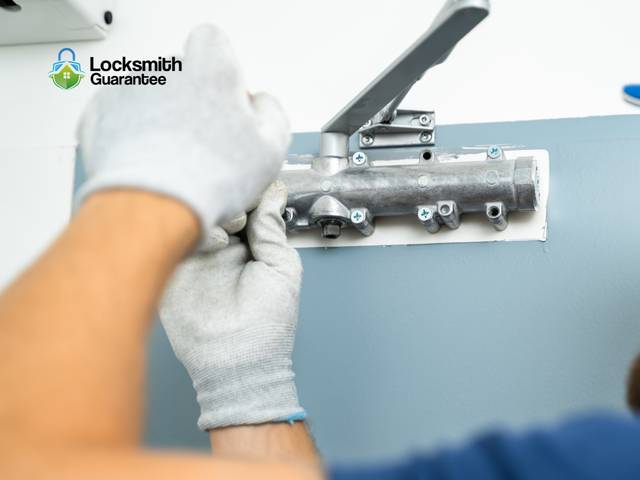
Overhead and concealed. Adjusting sweep and latch speed solves a lot of doors that are blamed on the lock.
Cylinders and cores
Including interchangeable cores, which let a business swap access with a control key instead of booking a locksmith for every change.
Cabinet and furniture locks
Desks, files, display cases and till drawers. Small, frequently lost, and quick to bring back into a system.
Electric strikes and readers
Where a door already has access control, we work on the mechanical side of it and on making sure the door still latches when the power is off.
Work is scheduled around business hours wherever the job allows, so a lock change on a restaurant door does not have to happen mid-service. Say what your quiet window is when you get in touch.
Business doors
Commercial hardware in place
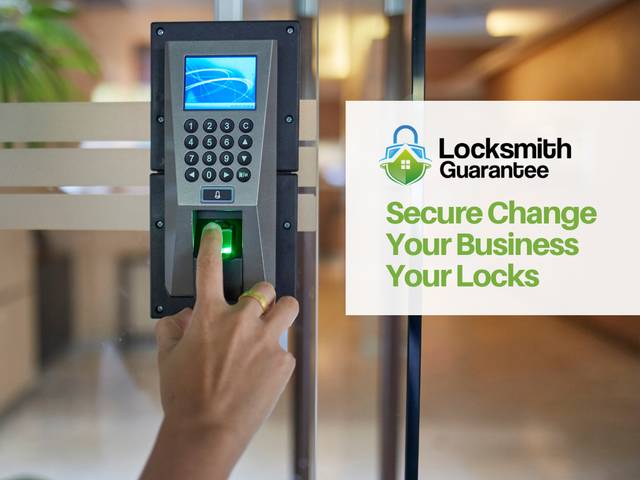
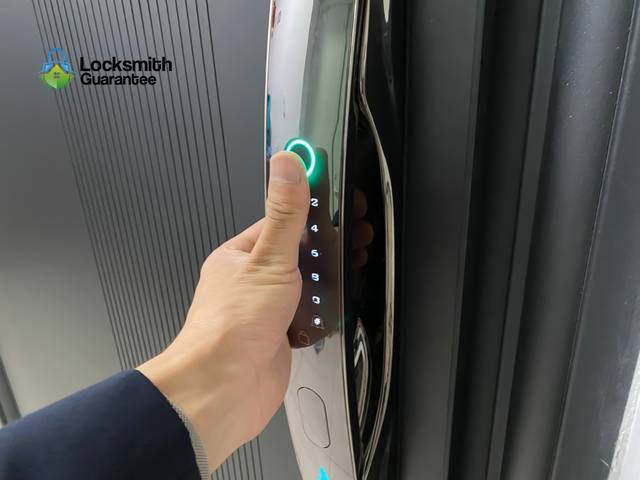
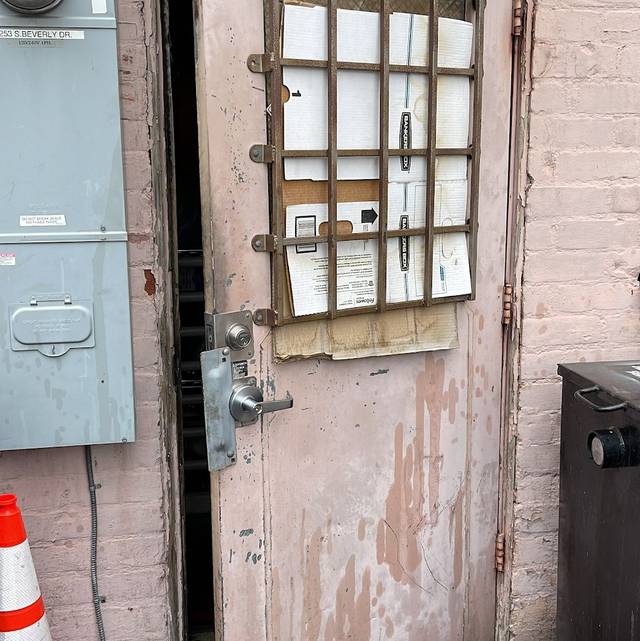
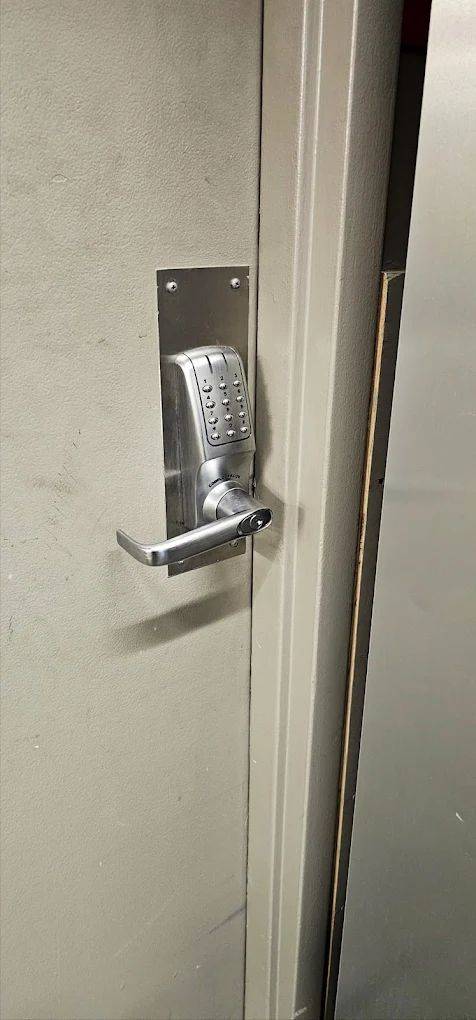
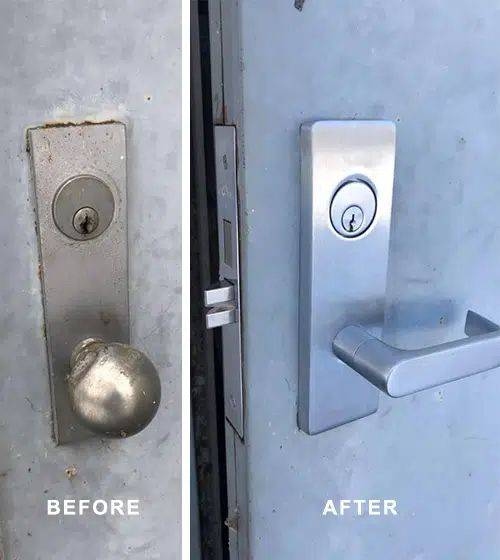
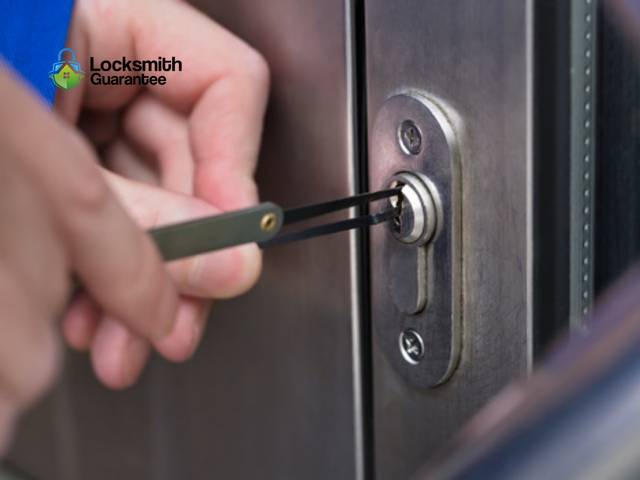
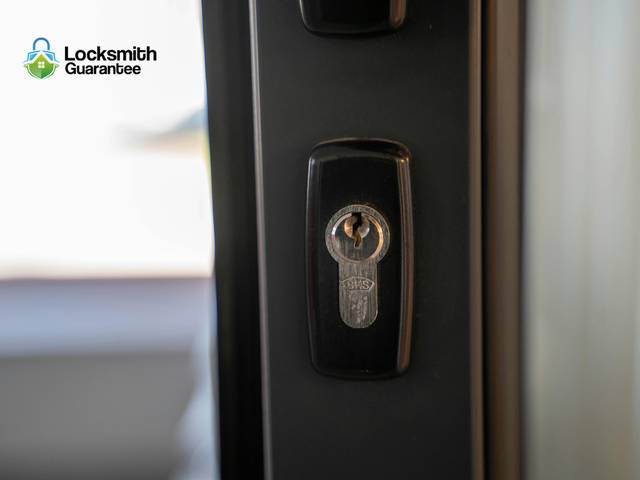
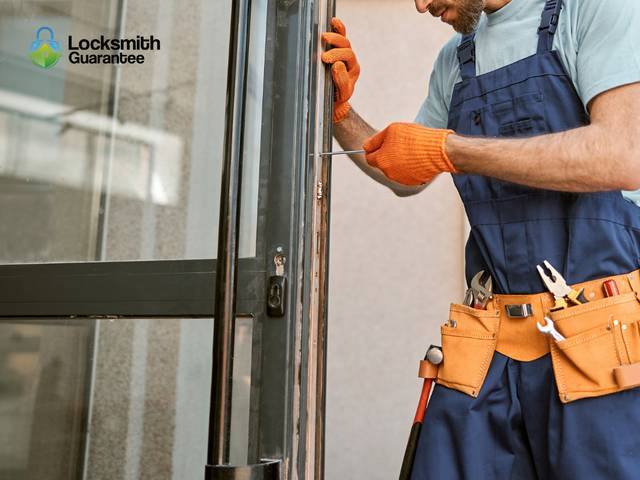
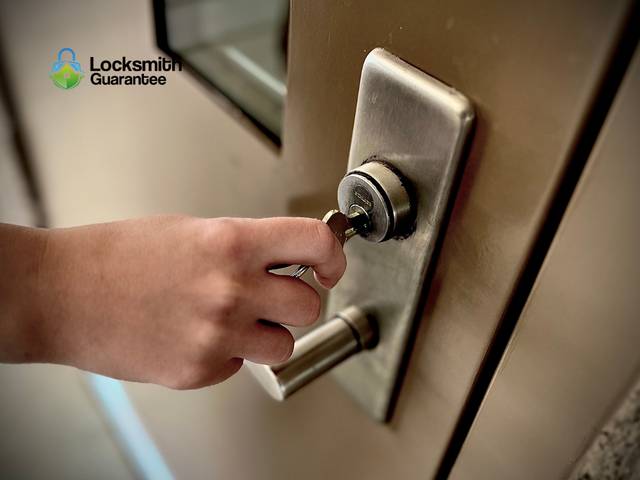
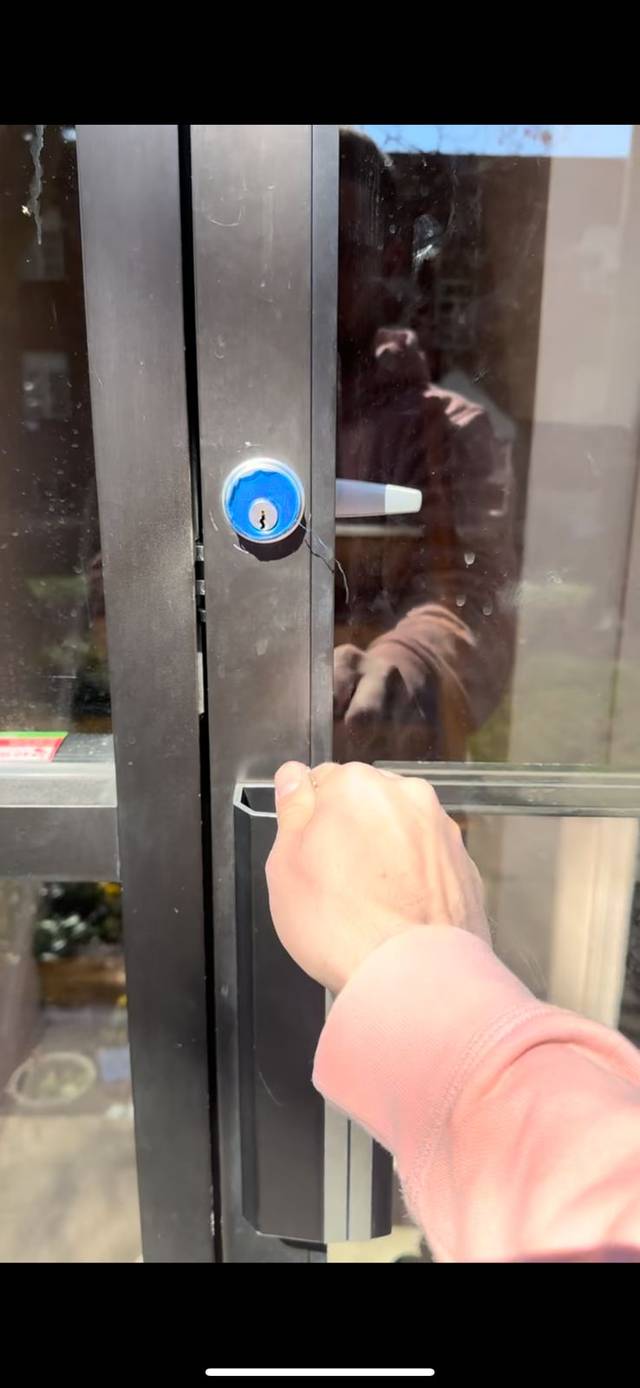
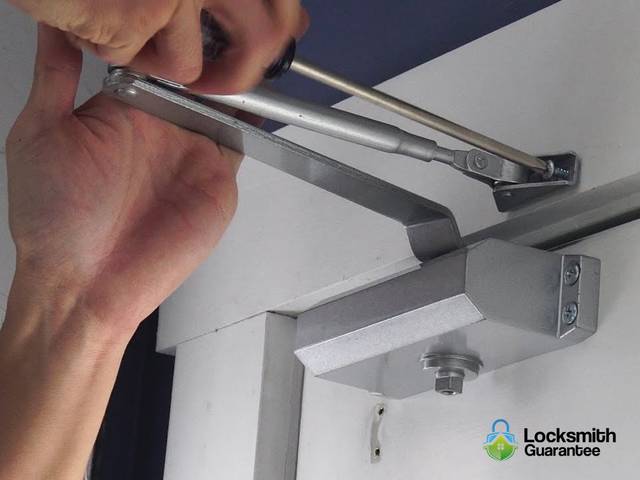
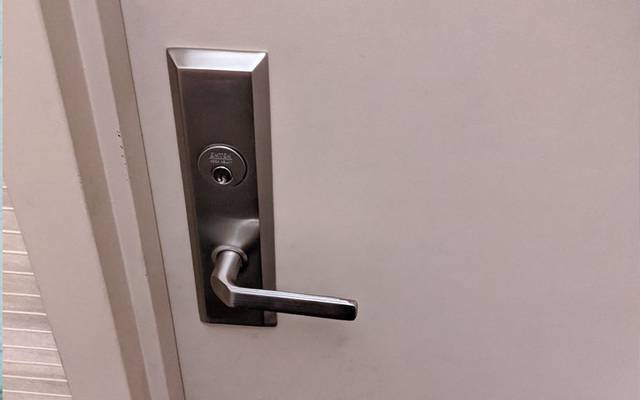
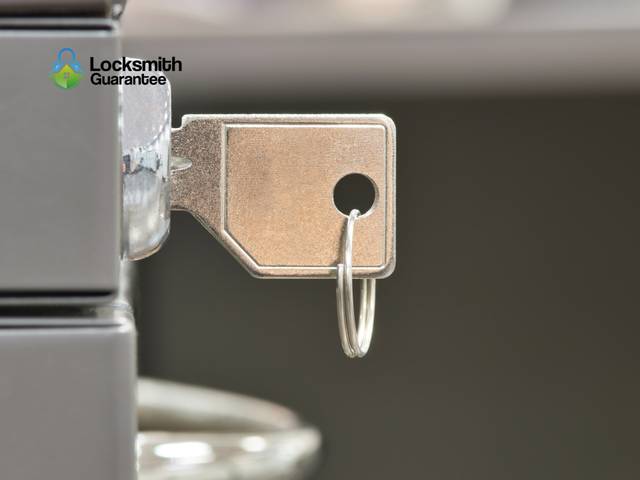
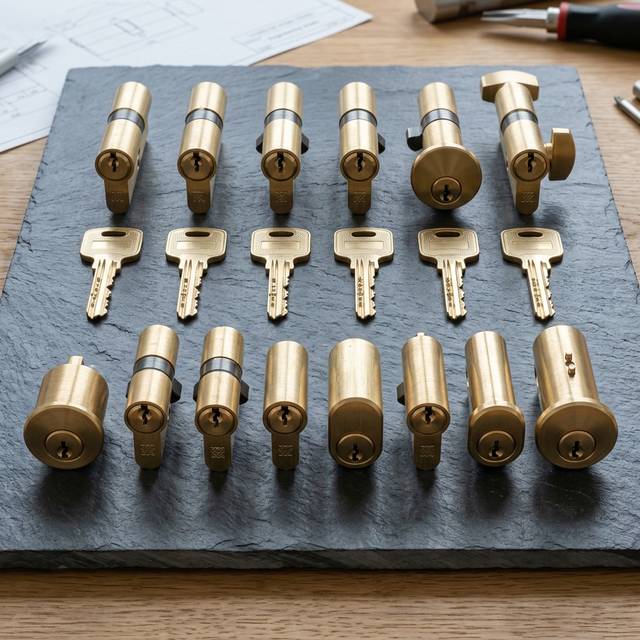
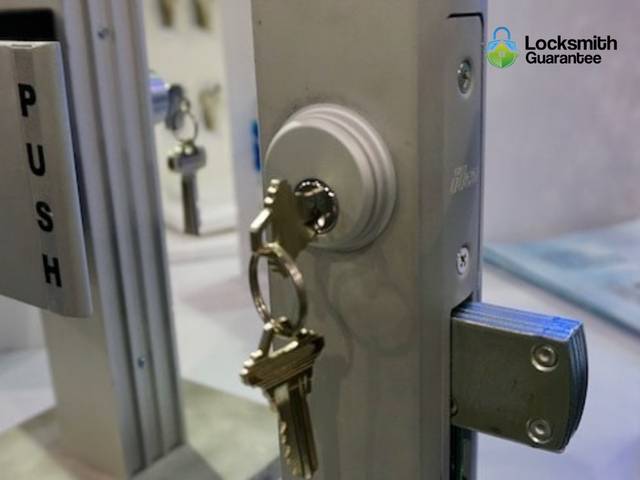
Storefront mortise locks, exit devices, closers, latch guards and readers, photographed on the doors they were fitted to. 6 of the 21 are our own jobs; the others illustrate the hardware.
Questions and answers
Questions from business owners
An employee left without returning their keys. What are the options?
If the keys were change keys for a small number of doors, rekeying those cylinders is usually enough. If they held a master, the whole system that master operated has to be repinned, which is the reason master keys are worth issuing sparingly. Either way the aim is the same: the returned-or-not question stops mattering.
Can you fit a lock that stops people leaving after hours?
Not on a door people work behind. Egress requirements exist so that anyone inside can get out without a key or a tool. If the concern is people entering rather than leaving, that is solvable — with an exit-only device, a reader on the outside, or a keyed cylinder that never affects the inside handle.
What is a restricted keyway and is it worth it?
A keyway where the blanks are not sold openly, so a key cannot be copied at a hardware counter. It is worth it when uncontrolled copies would be a real problem: shared buildings, cash handling, stock rooms, anywhere staff turnover is high. For a two-door office with three keys, it is usually more control than the situation needs.
Do you handle multi-tenant and commercial condominium buildings?
We work on tenant suites and back-of-house doors where the tenant or the owner instructs us. Common areas, lobby doors and building-wide systems are normally under the building's own management, and we would rather confirm who holds authority than fit something that has to come off again.
Can hardware be sorted out outside business hours?
We schedule around business hours where the work allows, within our opening times of 6:00 AM to 11:00 PM daily. An early start before a shop opens is often easier for everyone than an afternoon appointment.
Keep reading
Related pages for business premises
Commercial jobs often sit alongside these. Each covers a piece of the same problem from a different angle.
Talk through a building's doors
Send a list of doors, or a photo of the hardware on the ones that matter, and we can scope the work before a visit.