Car keys
Replacement car keys, cut and programd
A modern car key is two separate things in one object: a piece of cut metal and a piece of electronics. They fail independently, they are replaced independently, and the second one is where the variation lives.
Two halves of one job
Cutting metal, then convincing the car
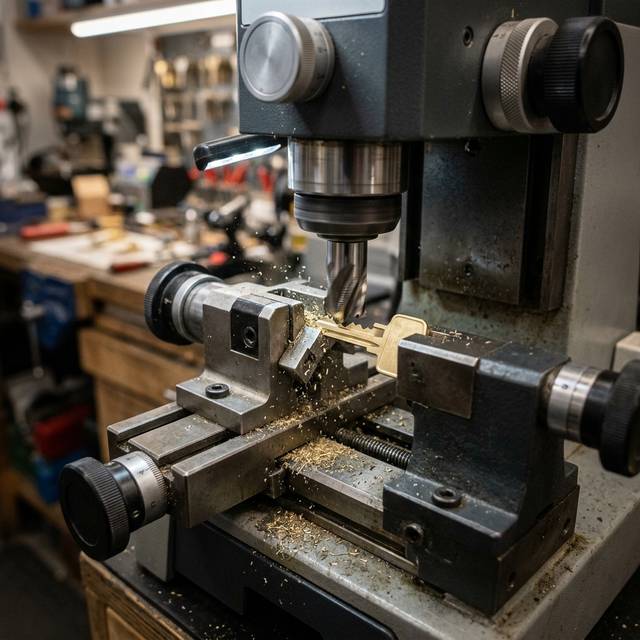
The mechanical half is straightforward. A blade is cut to match the vehicle's key code, which can be looked up against the VIN, or read from an existing lock where no code is available. Laser-cut and high-security profiles need different equipment from a basic edge-cut blade, but the principle is the same.
The electronic half varies by manufacturer and model year. Most vehicles built since the late 1990s carry an immobilizer: a chip in the key answers a challenge from the car, and without the right answer the engine will not run. Adding a new chip means writing it into the vehicle's own system, and how that is done — or whether it can be done outside a dealer at all — depends entirely on the car.
Which is why the first question is never “how much” but “what is it.” The key types guide explains how to work out which category yours falls into before you call.
What changes the job
The four things that decide what is possible
| Factor | Why it matters |
|---|---|
| Do you still have a working key? | Adding a spare alongside an existing key is a smaller job on many vehicles than starting from none. |
| Make, model year and trim | Two cars of the same model year can use different systems depending on how they were specified. |
| Key type | Mechanical, transponder or proximity. Each adds a stage. |
| Manufacturer policy | Some hold security data behind their own systems, which makes a dealer the only route. |
We check all four before quoting, because a number given without them is a guess. If the answer turns out to be that your vehicle has to go to a dealer, we will say so on the phone rather than after a visit.
Broken keys
When the key snaps in the lock
Metal fatigue does this, usually at the shoulder where the blade is thinnest and after years of being used as a lever. The good news is that the lock is normally undamaged, and the broken half can be extracted without dismantling the door or the ignition.
Two things make it worse. Trying to fish it out with something improvised tends to push the fragment deeper and damage the wafers. And turning the ignition repeatedly with a partial key inside can do real harm to a cylinder that was fine.
Once the piece is out, the remaining half is enough to cut a replacement from in many cases. Keep it.
Fobs
Buttons, batteries and pairing
A fob that has stopped locking the car is often a battery, and that is a two-minute job you can usually do yourself with the right cell. Where the buttons have failed mechanically or the case has cracked, the electronics can sometimes move into a replacement shell.
A fob that has genuinely lost its pairing needs reprogramming to the vehicle, which is the same process as adding a new key. Proximity fobs — the ones that stay in a pocket — almost always hide a mechanical blade inside for getting into the car when the battery dies. It is worth finding out how yours releases before you need it.
Cutting and coding
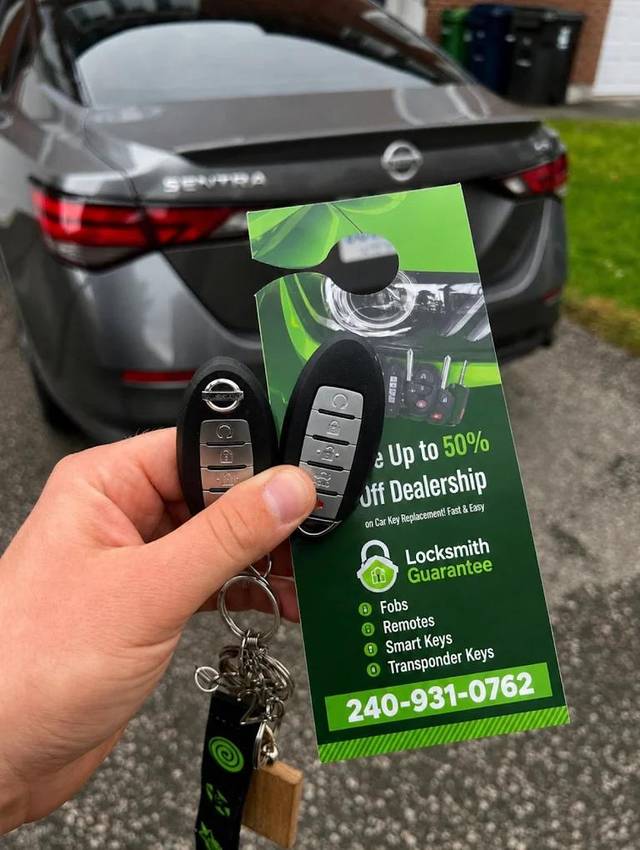
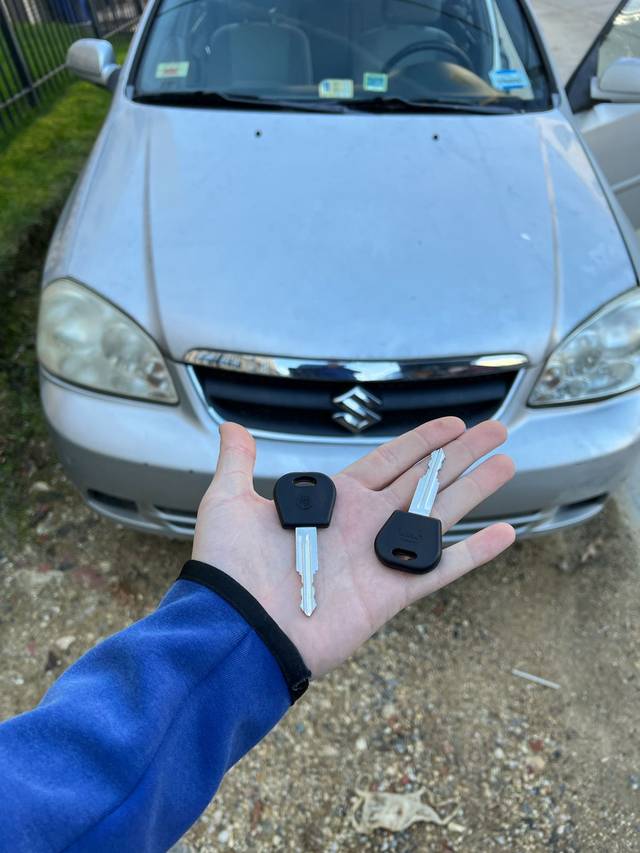
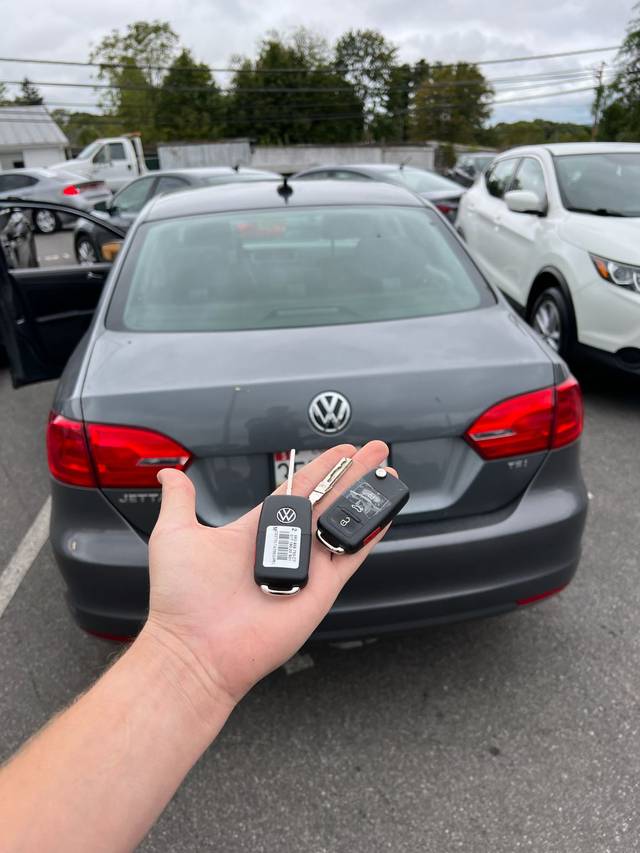
Key cutting, close up
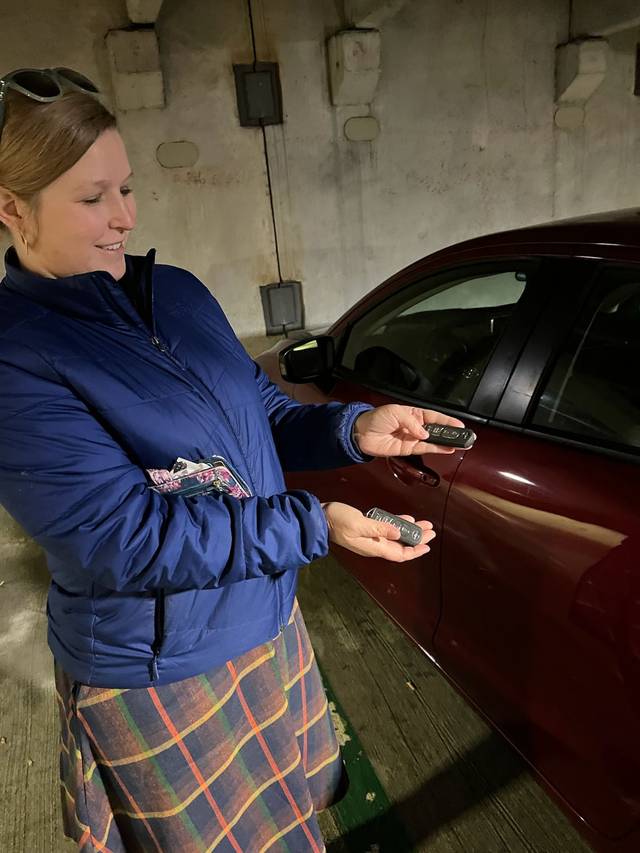
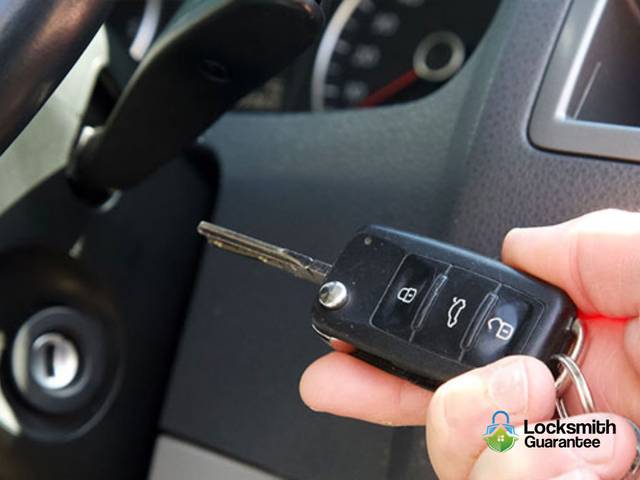
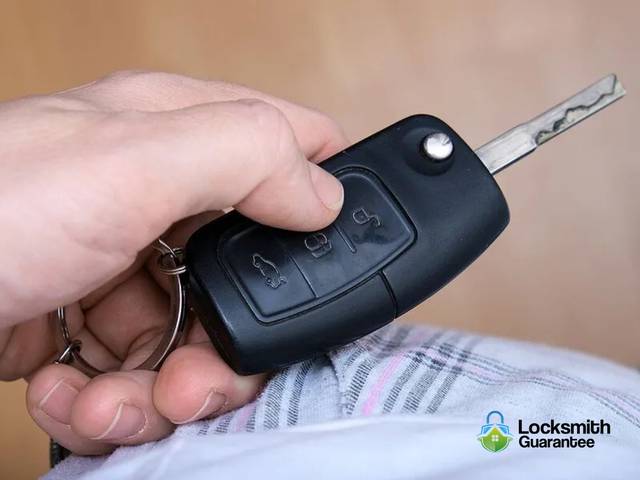
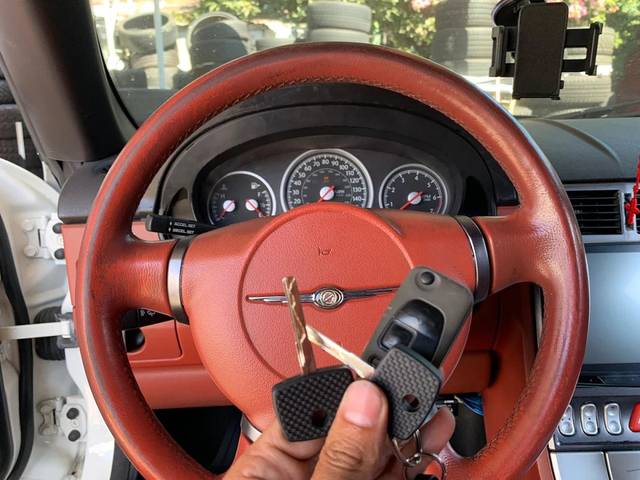
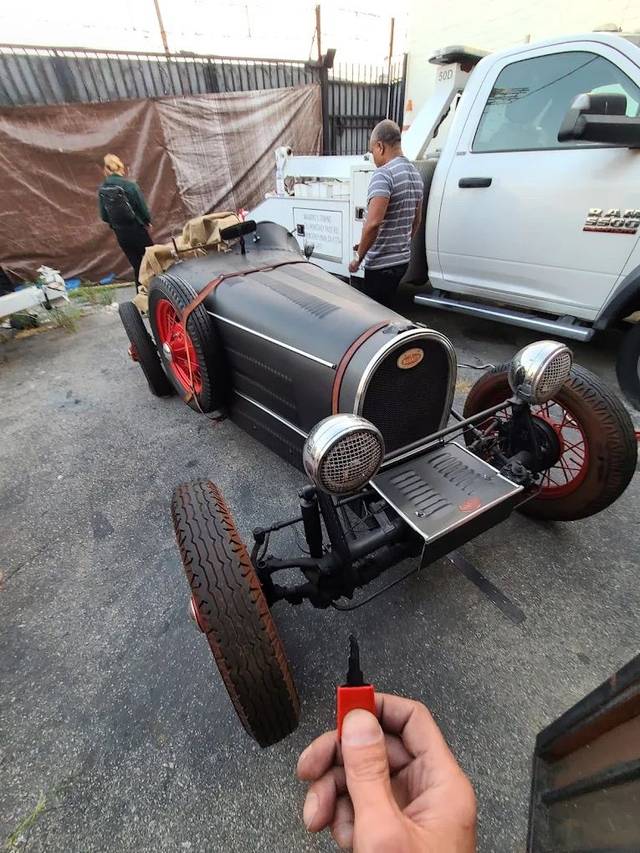
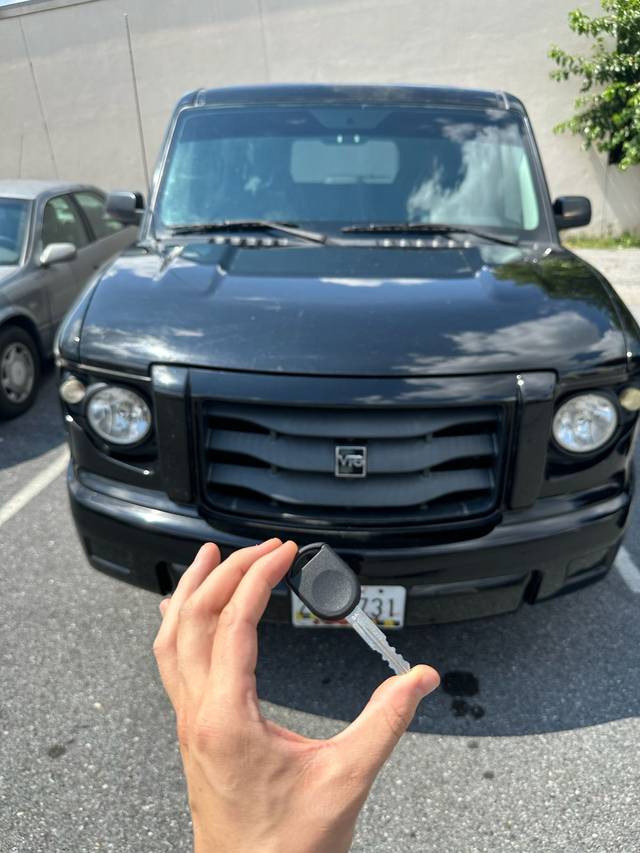
Blades cut from a code or from an existing lock, and the machines that do it. What happens after the metal is cut depends entirely on the vehicle. 7 of the 11 are our own jobs; the others illustrate the hardware.
Questions and answers
Questions about car keys
What do I need to have ready?
The VIN, the registration or title in your name, photo identification, and the year, make, model and trim. Proof of ownership is not optional on vehicle work, and a locksmith who does not ask for it should worry you.
Does a locksmith cost less than the dealer?
Frequently, though not always, and it depends on the vehicle. What we can do reliably is tell you before you commit whether we can do the job at all, so you are not paying twice to find out.
Can you make a key with no working key at all?
On many vehicles, yes — the blade from the key code held against the VIN, and the electronics through the diagnostic port. Some manufacturers and some model years put that out of reach outside a dealer. It is the first thing we check.
How long does it take?
Cutting a blade is minutes. Programming ranges from a few minutes to considerably longer, and a small number of vehicles impose a security delay before a new key can be added, which nobody can shorten. We will give you a realistic figure for your car rather than a general one.
My key works but the car will not start. What is that?
Most likely the transponder rather than the blade — a failed chip, or one that has lost its pairing. It can also be a fault on the vehicle side, in the immobilizer or the aerial ring around the ignition. Both are worth identifying before anything is replaced. See automotive work for what that check involves.
Keep reading
The rest of the vehicle picture
Key replacement sits inside a wider set of vehicle work, and the pages below cover the parts either side of it.
Have the VIN and the paperwork to hand
With the vehicle details and proof of ownership, we can usually tell you what is possible in a single phone call.