Repair and replacement
Lock repair, and knowing when to stop repairing
Plenty of hardware that feels finished is not. Equally, some locks are past sensible repair and keeping them going is throwing good money after bad. The difference is usually visible in ten minutes.
Diagnosis first
The lock is often the innocent party
A door that needs lifting or shoving before it will latch has almost never got a lock problem. The latch is landing on the metal below the strike pocket instead of entering it, because the door has dropped, the frame has moved, or both. Fitting a new lock into the same opening produces exactly the same behavior, with a receipt attached.
Other symptoms point elsewhere again. A key that goes in but will not turn is often a worn key rather than a worn lock. A deadbolt that throws with the door open but not closed is an alignment problem. A handle that has gone slack is usually a spindle or a spring, both of which are parts rather than a whole lock.
So the first thing that happens is a look at the whole opening: hinges, gaps, the strike, the latch face and the bolt throw. The troubleshooting guide covers the same checks in a form you can run yourself first.
Specifying a replacement
What the grades on the box mean
American door hardware is graded by ANSI and BHMA against tested cycle counts and strength. It is the one number on the packaging that reliably tells you something, and it is worth understanding before you buy.
| Grade | Built for | Sensible use |
|---|---|---|
| Grade 1 | The highest tested durability and strength | Business entrances and any door in constant use |
| Grade 2 | Middle tier | A good standard for a house front door |
| Grade 3 | Basic residential duty | Interior doors and low-traffic secondary entrances |
Grade is not the whole story. A Grade 1 deadbolt held by half-inch screws into soft trim will lose to a shoulder before the bolt is troubled. Where the money makes the most difference on a typical DC row house is the strike and the frame behind it, not the lock body.
Choosing a deadbolt goes through throw length, strike reinforcement and the cylinder itself in more detail.
Replacement
When new hardware is genuinely the answer
Four situations where repair is not worth attempting, and one where it depends entirely on the door.
The lock has been forced
Anything that has taken an attack gets replaced. Internal damage is not always visible, and a compromised cylinder is not worth the saving.
Parts are no longer made
Some hardware from the 1960s and 1970s has no spares left. If a case needs a part that does not exist, the decision makes itself.
The bolt no longer throws fully
Where that is the lock rather than the alignment, the mechanism is worn past useful adjustment.
The door has no deadbolt
Nothing to repair. A single-cylinder deadbolt with a reinforced strike is the most useful thing you can add to a typical front door.
Historic hardware — it depends
On an older door, the original is often worth keeping in service with a modern lock doing the security work elsewhere. See Capitol Hill and Georgetown.
Repairs
Hardware taken apart and put back
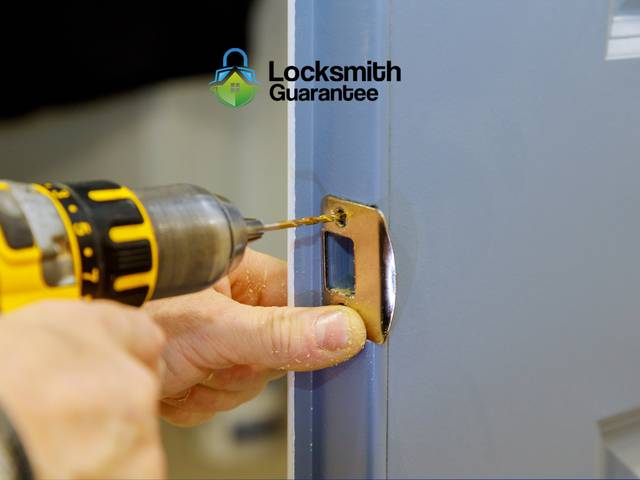
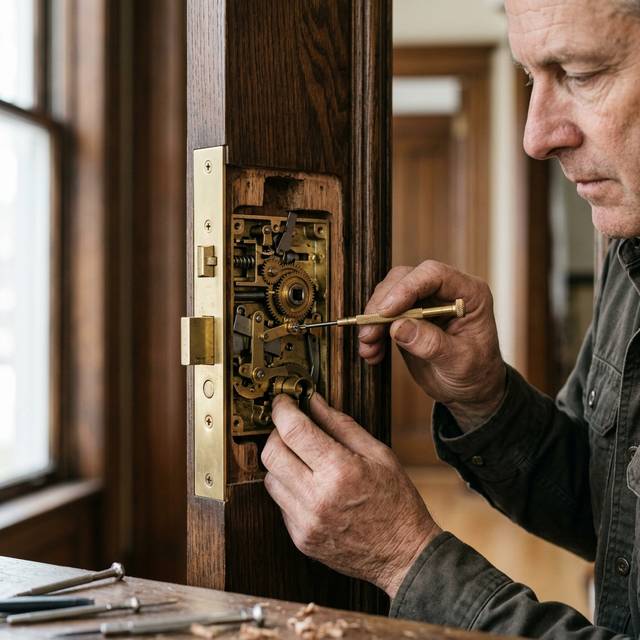
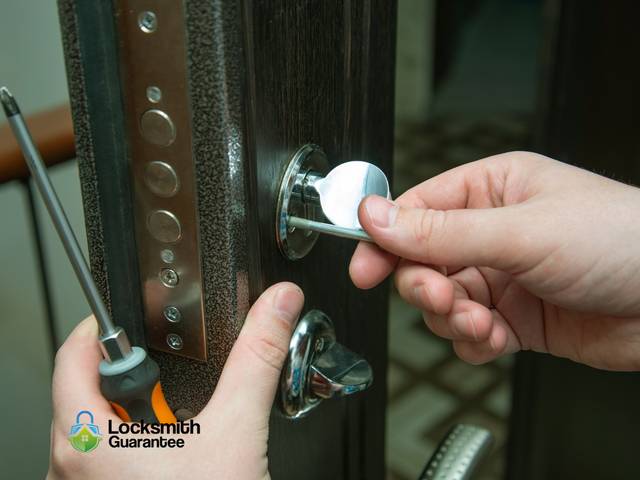
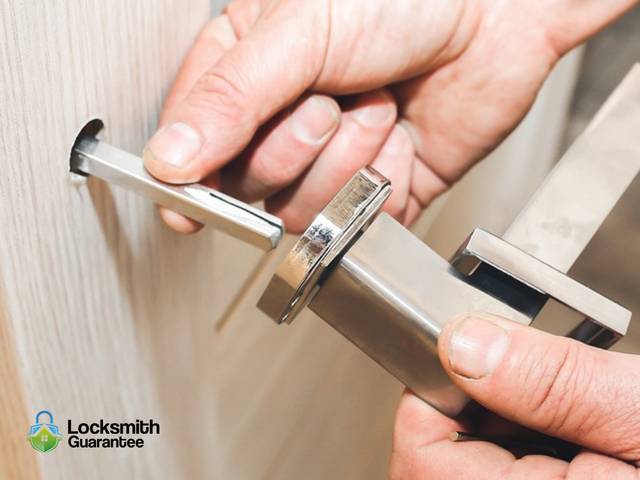
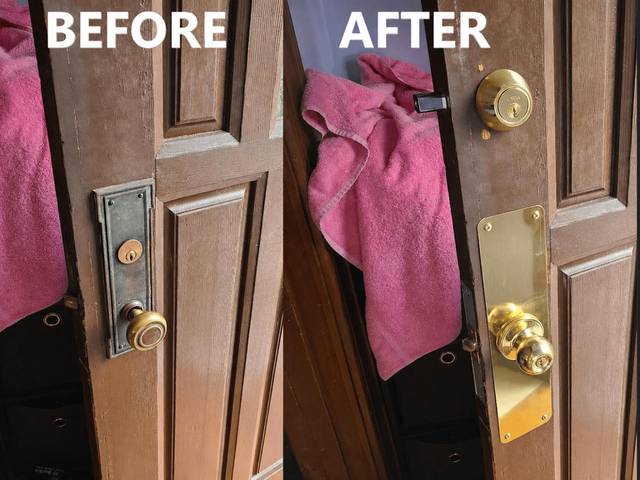
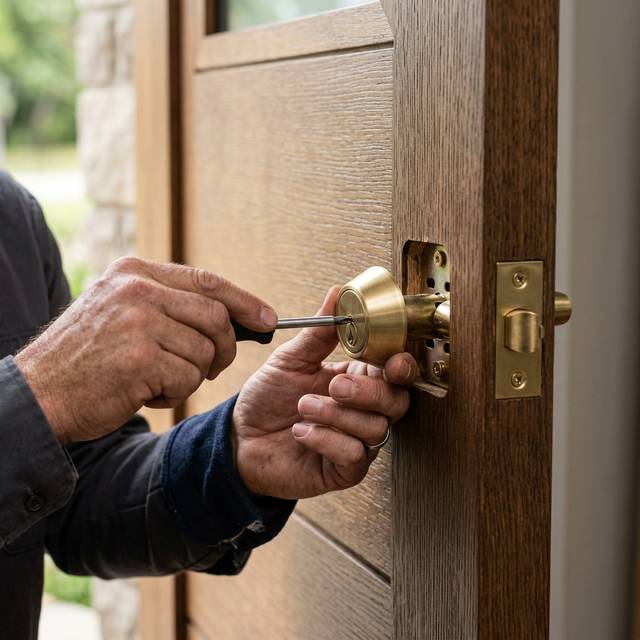
Cases opened on the bench, latch plates recut, bores drilled for replacements. Most of these doors kept the lock they arrived with. 1 of the 13 are our own jobs; the others illustrate the hardware.

Questions and answers
Questions about repairs and replacements
My key turns but nothing happens. Is the lock broken?
Usually yes, in one specific way: the connection between the cylinder and the bolt has failed. On a deadbolt that is often the tailpiece or the cam; on a mortise lock it may be the hub. It is frequently a part rather than the whole lock, so it is worth looking before ordering.
Should I replace both locks on my door at once?
Only if both need it. What is worth doing at once is keying them alike, so you are not carrying two keys for one door. That can be done whether you replace one lock, both or neither.
Does a more expensive lock actually make a difference?
Up to a point, and the point arrives sooner than the marketing suggests. Moving from Grade 3 to Grade 2 on a front door is a real improvement. Beyond that, on a wooden frame, the money is better spent on a reinforced strike and three-inch screws into the framing.
Can you fit hardware I have already bought?
Yes, assuming it suits the door. The things that catch people out are backset — the distance from the door edge to the center of the hole — door thickness, and bore size. Send a photo of the door edge before you buy if you are unsure.
What about a door that has been kicked?
Expect the frame to need attention as well as the lock. Splintered jambs rarely hold a strike properly again without reinforcement, and refitting a new lock into damaged timber gives you a new lock on a weak opening. We will be straight about whether it needs a carpenter first.
Keep reading
Deciding what to do next
Repair, rekey or replace are three answers to overlapping questions. These pages cover the other two.
Send a photo before you buy anything
The door edge and the face of the lock are usually enough for us to say what will fit and whether it needs replacing at all.